Summary

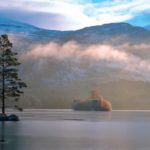
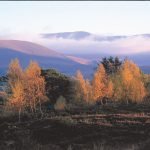
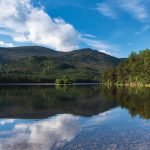
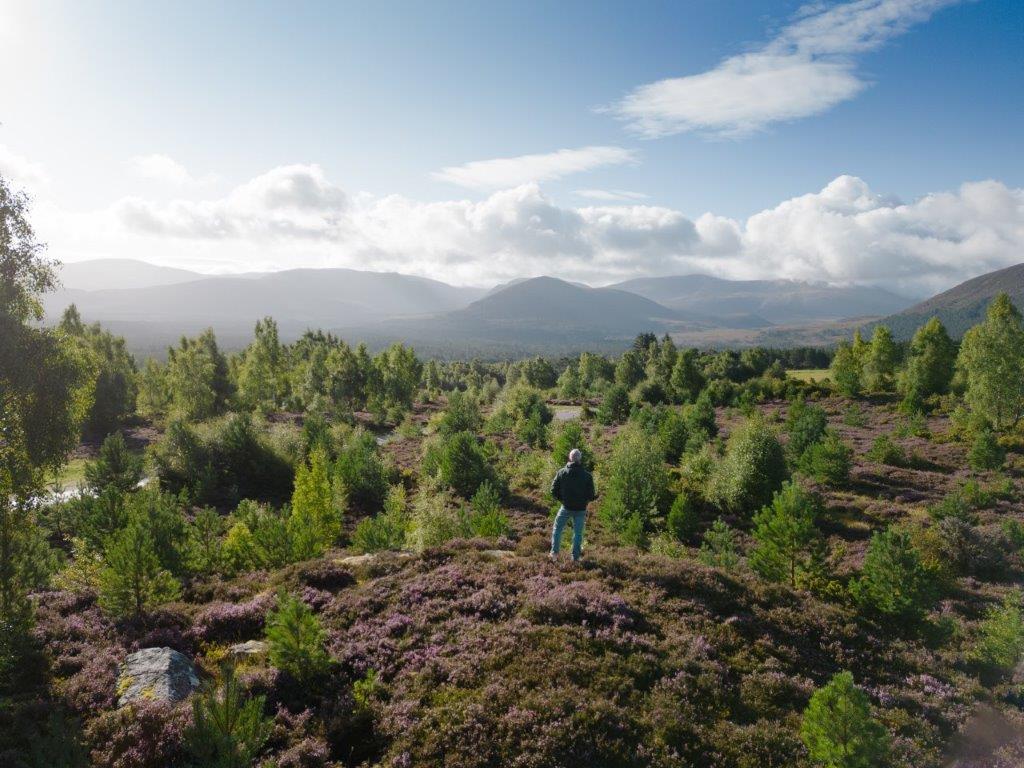
Rothiemurchus is an exceptional Highland estate close to Aviemore, Inverness-shire. From the River Spey to the summit of Braeriach, Rothiemurchus covers some 7,400 hectares (approx. 18400 acres), which includes farmland, forestry plantations, significant areas of native pine forest and high-altitude mountain & moorland. Since the late 1980’s the estate approach to management has been based on people and nature working together.

Alongside the 50 or so people working on the estate we welcome approximately 390,000 visitors each year. Visitor accommodation and activities have surpassed farming and forestry as the dominant business activities, but it is the land management activities that ensures sustainability of the whole enterprise.

The farm activity focusses on producing beef and barley, and is being managed to reduce reliance on artificial fertilisers. Nitrogen fixing plants and by-product from whisky distilling will be used instead to maintain soil fertility and build soil carbon. Whisky by-product is also used to provide some winter feed supplement for the cows to reduce the use of imported feed.

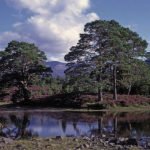
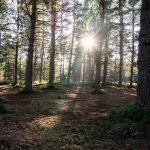
Forest management focusses on enhancing the environment for the special wildlife associated with pine, juniper, birch and oak woodland on the estate, as well as producing logs for construction and fuelwood.

Alongside the steady increase in woodland area, peatland restoration within the moorland realm aims to increase the amount of atmospheric carbon being locked up into peat and improve the habitat for birds breeding in this remote landscape.

Rothiemurchus works with its guests, government and agencies to implement its sustainable land management plans which aim to bring all of the estate close to net-zero with respect to its carbon footprint and to enhance natural biodiversity.

Introduction

Rothiemurchus covers 7,437 hectares (18400 acres), situated between the River Spey (200m above sea level), within 1km of from the centre of Aviemore (population 3000) and the summit of Braeriach (1296m amsl). Estate enterprises revolve around management of the land – farm, forest and mountain. Central to this are the people who live on, close to, who work on and who visit Rothiemurchus. It is difficult to estimate the number of visitors to Rothiemurchus, but it is in the region of 390,000 visitor days per year.

The area designated for conservation (SSSI, SPA/SAC ) on the estate is 6,135 hectares (ha) (82% of the total estate area) and the estate is entirely within the Cairngorms National Park.

Rothiemurchus recognizes the reality of running a sustainable business within a climate emergency, and the need to reach ‘net zero’ in line with Scottish Government policy. We have already initiated several changes to reduce our climate impact alongside many initiatives to enhance wildlife habitats.

People and Community

Staff are empowered to drive continual improvement to reduce our carbon footprint and reduce operating costs, as well as to improve our customer experience. A sustainability policy is developed and implemented with integration across all activities on the estate, including partner enterprises.

We meet regularly with Aviemore & Vicinity Community Council to understand local community expectations for access and affordable housing. We are part of the Cairngorms Business Partnership.  We operate to the Scottish Land Commission landowner roles and responsibility guidelines.

Rothiemurchus prioritises the use of local contractors for repair, maintenance & development work.

Land has been made available for social/affordable housing; 10 homes to-date.

Forest

Since 2015 the forest plan area has covered around 1800ha, 55% of which is native woodland and 31% as open ground suitable for woodland regeneration.

Of the native woodland area, 113 hectares is managed as core old-growth forest (non-intervention other than the removal of non-native species as required).

The aims of woodland management on Rothiemurchus are to:

  1.  – Increase the area covered by trees. 74ha of regeneration is now registered with the Woodland Carbon Code.
  2.  – Accumulate more deadwood, especially within the old growth areas.
  3.  – Produce timber that locks up carbon and replaces high carbon fuels and materials.
  4. – Improve woodland condition through sustainable deer management, fire prevention, and by encouraging the public to stay on promoted trails especially in the breeding season.
  5.  – Work with CNPA and other partners to support the reintroduction of beavers & wildcats, and to sustain populations of Biodiversity Action Plan species, e.g. capercaillie, black grouse, narrow-headed ant, twinflower.

Future plans include:

  •  – Improving the diversity of the field layer through grazing cattle, monitoring how this impacts on rare plants and animals.
    – Working with the Cairngorms National Park Authority on an improved fire prevention strategy.


Farm

The farm enterprise manages 474ha. Our aims with the farm enterprise are to minimise inputs for optimal outputs, in terms of beef and barley products, as well as sustaining employment of staff and contractors. The farm is Quality Meat Scotland accredited. Recently we have increased the amount of soil testing to use fertilisers more efficiently and target their application to where they are needed.

In addition the farm objectives are to:

– Install more cattle troughs where required to keep cattle away from river banks.
– Use distillers’ draft instead of protein from processed feeds.

Future plans will include:

– Reducing fertiliser use further through increased use of nitrogen fixing plants like clover.
– Use of digestate from distilleries in place of fertiliser.

Mountain

Some 4,710ha of Rothiemurchus is upland, part of it managed under a Muirburn plan approved by NatureScot. Current initiatives to reduce impact on the climate include:

  • Limited, small-scale muir-burn within tight guidelines to diversify the age distribution of heather and sustain a population of red grouse.
    –  Peatland restoration.
    – Since the 1980’s deer numbers have been reduced to what can now be better managed to meet sustainability and habitat enhancement objectives. Recreation hunting is used to generate the income that pays for the staff who protect nature from wildfire & interacts with members of the public to encourage responsible dog ownership.

Future plans will include:
– Scattered woodland expansion along water-courses and above the muir-burn altitude,
– More peatland restoration.

Out and About

Activities include pony trekking, guided tours, quad bike safaris, archery, corporate visits and activities, volunteering on environmental projects, clay-pigeon shooting, stocked loch fishing and more.

Working with visitors is fundamental to sustaining the special nature of Rothiemurchus and includes:

  • – People connecting with nature through ranger-led tours and guided activities.
    – Published map & information for members of the public, including new interpretation for a Beaver trail, in partnership with CNPA .
    – Open access for all, within the responsibilities described in Scotland’s Outdoor Access Code. There are 24 km of designated core path and other promoted trails, including the themed Beaver Trail.
    – Low impact activities include pony trekking and archery.

Future plans will include:
– Electrification of quad bikes
– Establishment of a social enterprise that will match donations to grants to fund additional habitat improvements for wildlife.

Homes and Offices

Homes (staff accommodation). The estate has 9 homes used by estate staff (including the owners) and all are on the estate.

Insulation has been improved, but more could be done but requires significant investment.

– Electric car-charging points
– Offices: Two of the larger buildings on the estate are multifunctional and heated using wood chips.

Future Plans will include:
– Improve energy efficiency
– Solar panels on roof spaces
– Electric car-charging points
– Purchasing policy will specify FSC certified (or equivalent) timber products

The Barn and Farm Shop

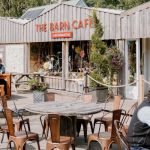
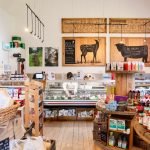
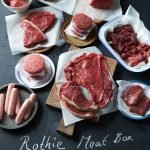
The Barn Café has a floor plan of some 145m2 and serves up to 60 covers in a day. The Farm Shop, selling crafts, cards and groceries (including Rothiemurchus beef, venison and smoked rainbow trout).

Moves towards greater sustainability has included:

– Local, seasonal.
– Retail and accommodation work together to ensure guests are enabled to ‘shop local’.
– Biodegradable – all take-away cups and containers are biodegradable/compostable.

Future plans will include:
– Getting more foraged and local grown produce into the menus
– Selling products with purpose.
– Reducing plastics in products and supply chains
– Zero waste/circular economy for products and packaging; hot composting of kitchen waste and joining – ‘Too Good to Go’
– Installing solar panels on the barn roof
– Providing at least 2 electric car-charging in the carparks

INSTAGRAM

SUBSCRIBE