



Celebrating Beaver Reintroduction Success at Rothiemurchus
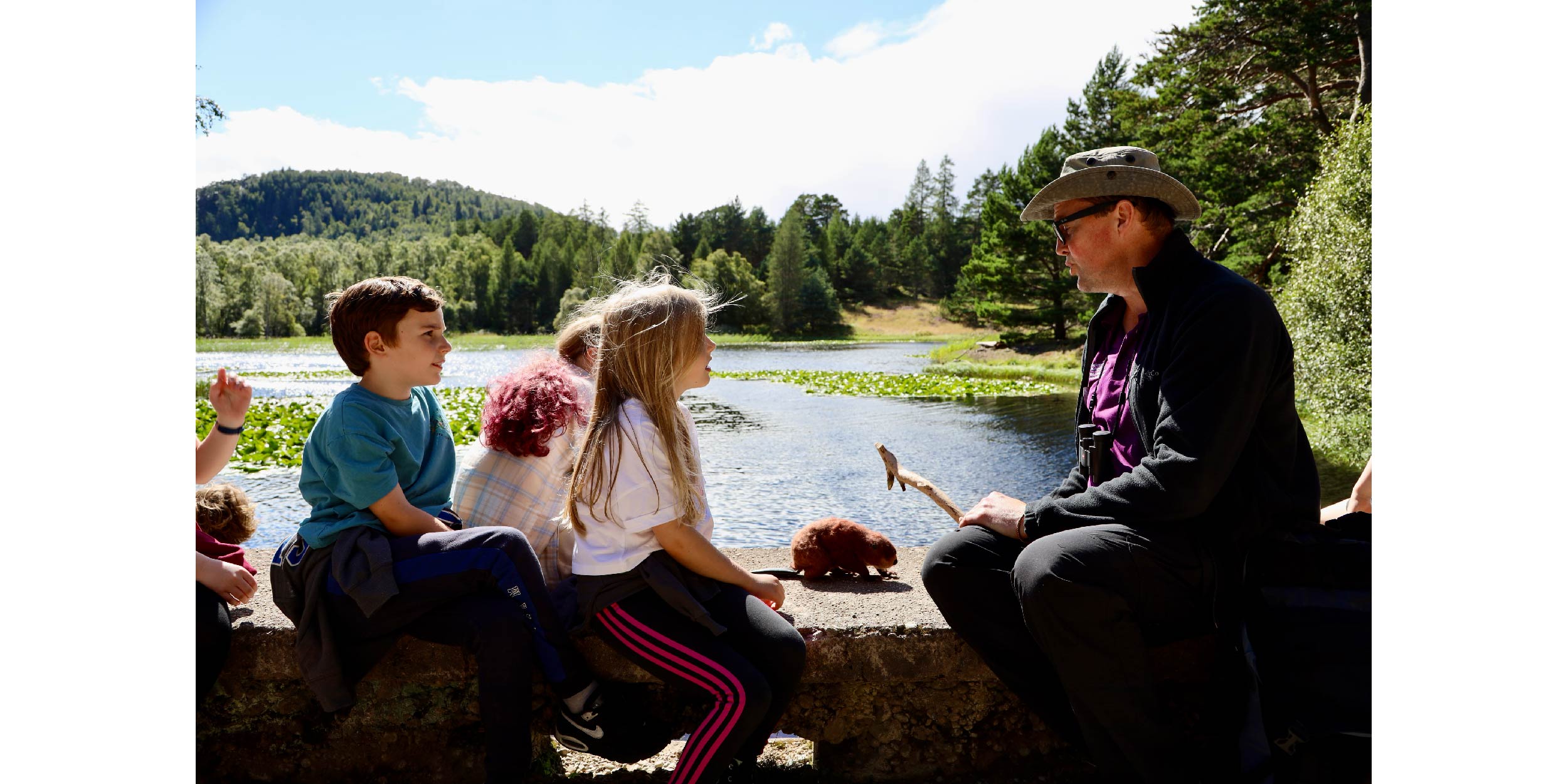
In 2023, Rothiemurchus visitor research revealed an appetite for opportunities to learn more about wildlife and nature. With perfect timing, the arrival of beavers gave us an opportunity to help people learn more about this once-extinct species, the ancient forest woodland habitat they live in, and the other wildlife that lives at Rothiemurchus. The return of beavers to the Cairngorms National Park has been led by the Cairngorms National Park Authority, working closely with partners, land managers and local communities.
There’s now even more to see and do at Rothiemurchus
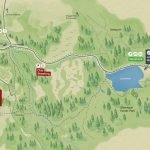
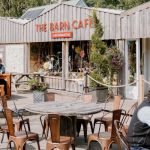
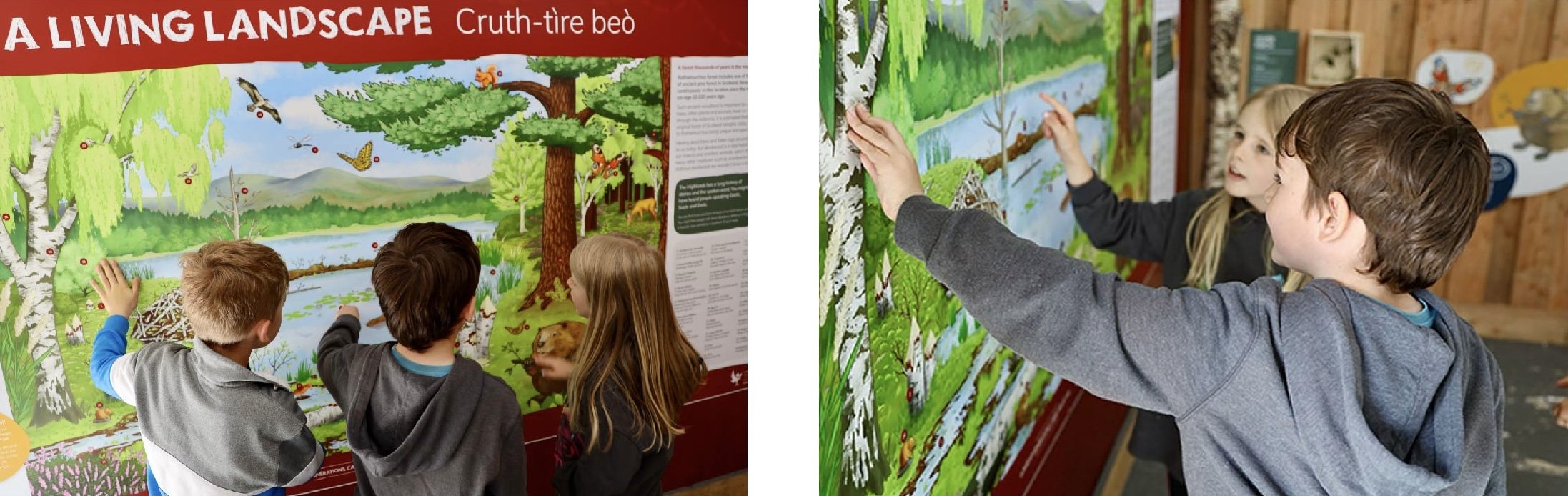
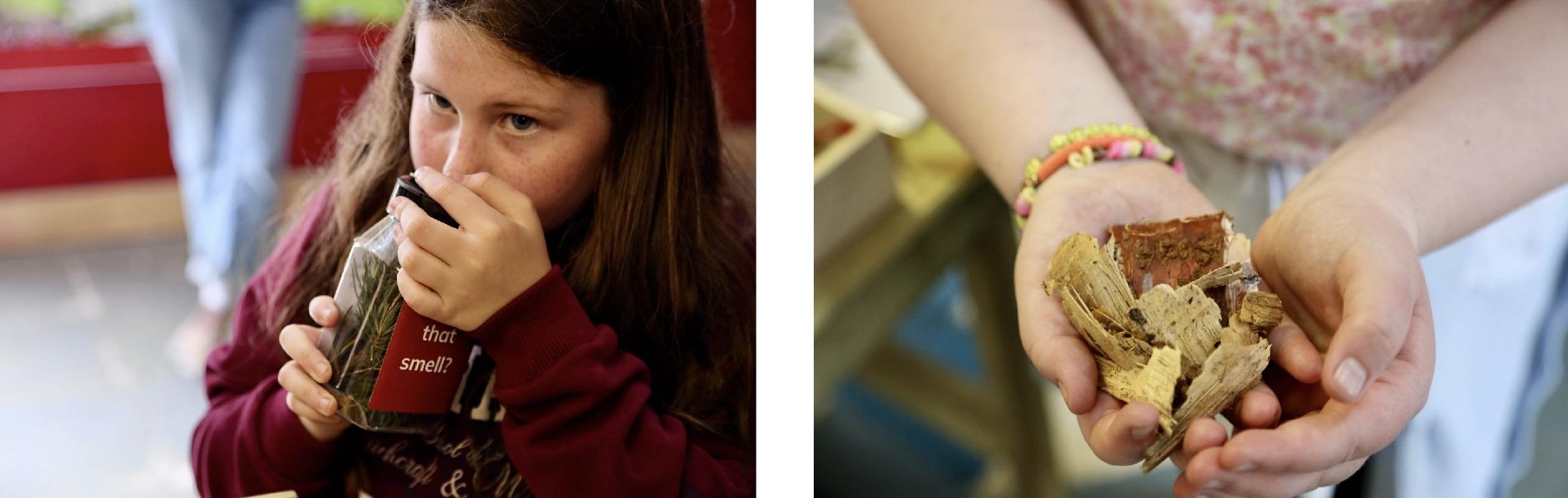
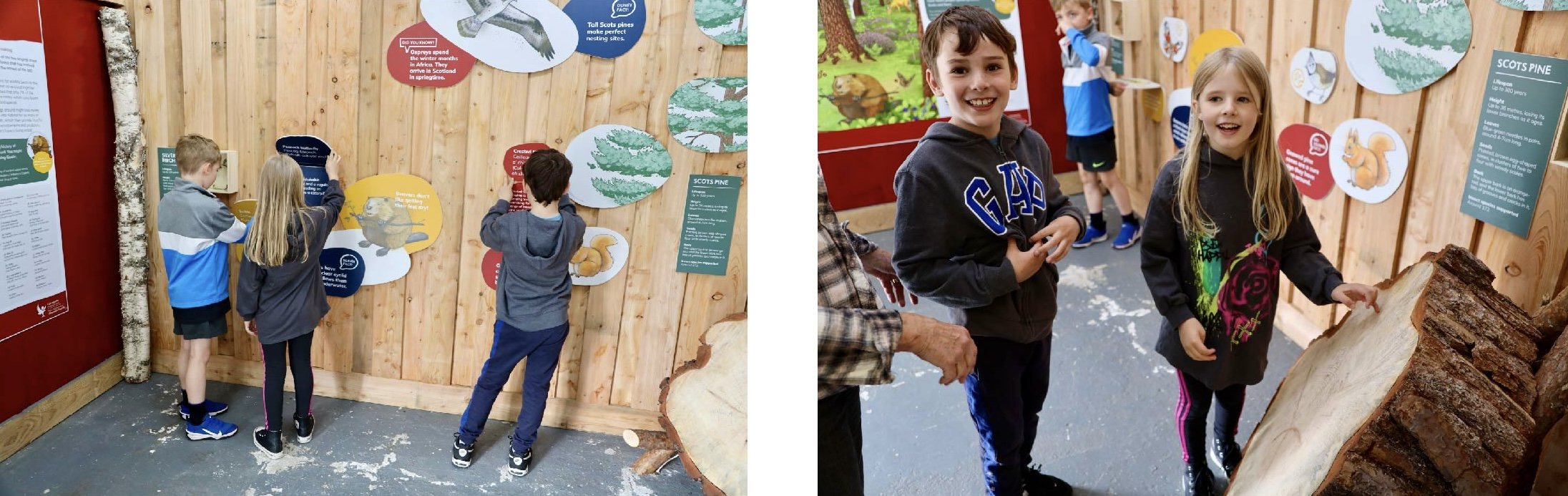
At the beginning of December 2023, there hadn’t been beavers in the Cairngorms for 400 years. Only eight months later, our team is delighted to see signs that the pair released at Rothiemurchus is thriving. Even more excitingly, two recently became three with the arrival of their baby (called a kit). There’s also a well-used trail through their habitat lined with fascinating beaver facts, an interactive exhibition at The Barn Café with a touch table for a truly hands-on experience, updated trail maps, information boards dotted around the busiest areas, and better signposting for walking and cycling routes.
Walking together to celebrate success
Much of this work – and the fact that the beavers are here at all – is the result of close collaboration between the teams at the Cairngorms National Park Authority and Rothiemurchus, as well as creatives including digital wildlife artist Fiona Gowan. To celebrate the project’s success to date, we hosted a walk on 13th August 2024 for people who have played a key role, inviting some local families to join in too.
Beaver Project Manager Jonathan Willet took the group on a fascinating walk along a portion of the newly named Beaver Trail at Rothiemurchus. He was joined by Dr Sarah Henshall, Head of Conservation at the Park Authority, elected Park Authority board member Lauren MacCallum and convener of the board, Sandy Bremner, Dr Roisin Campbell-Palmer from the Beaver Trust, and Ollie Mackay, Head Ranger at Rothiemurchus, among others.
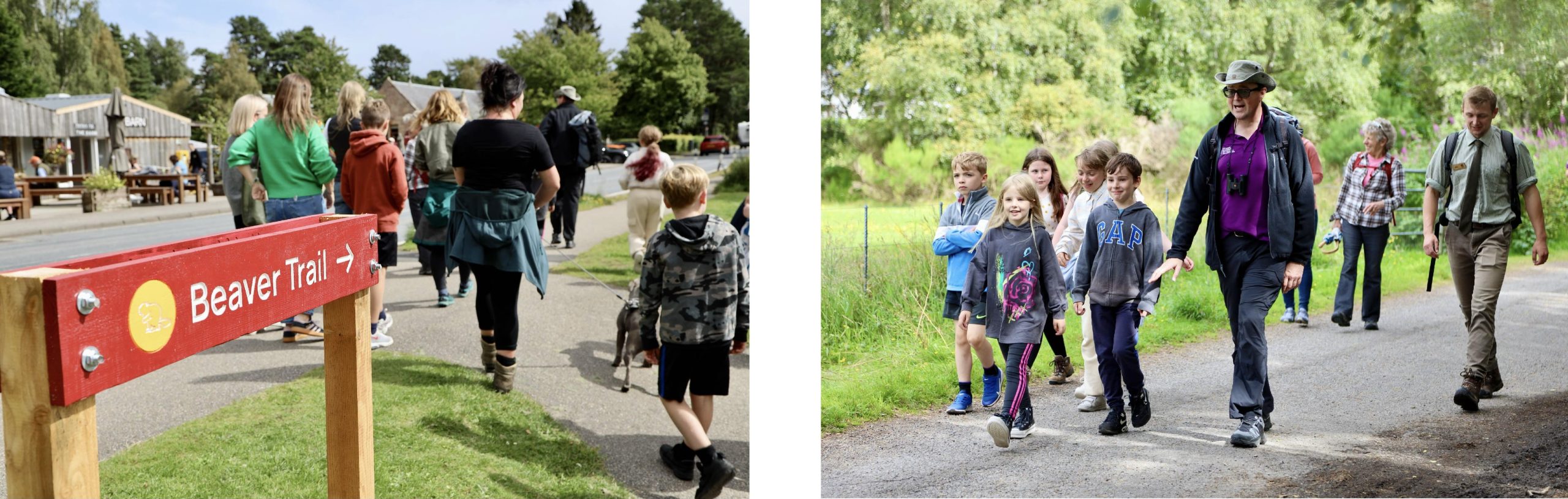
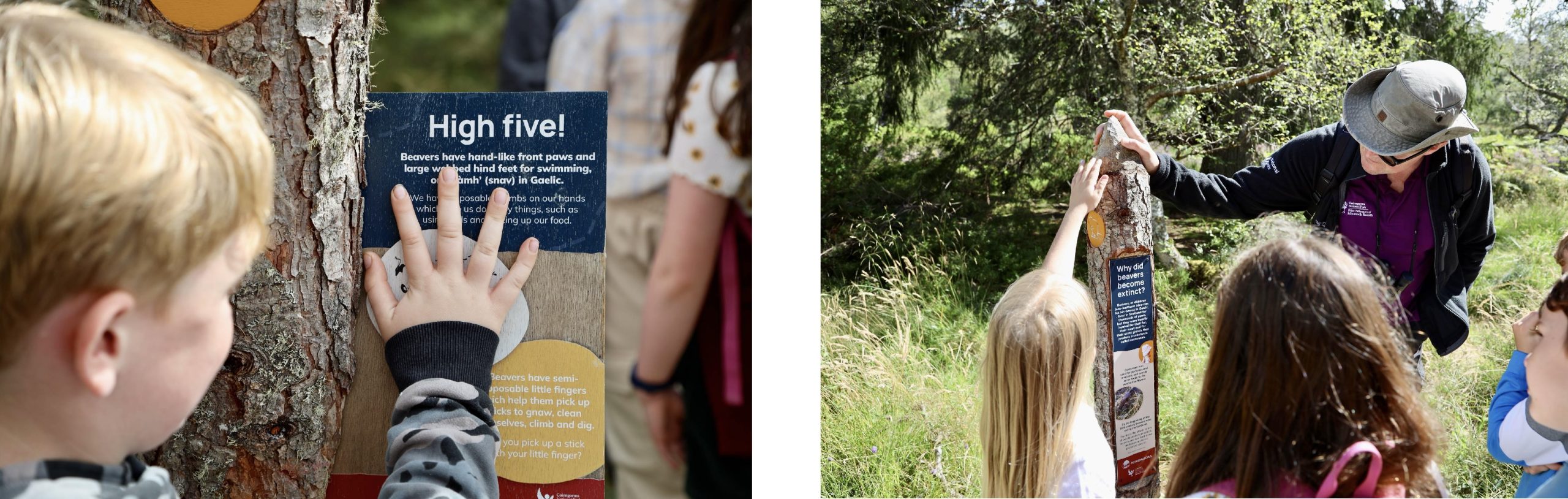
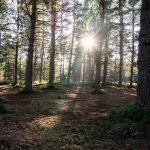
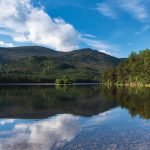
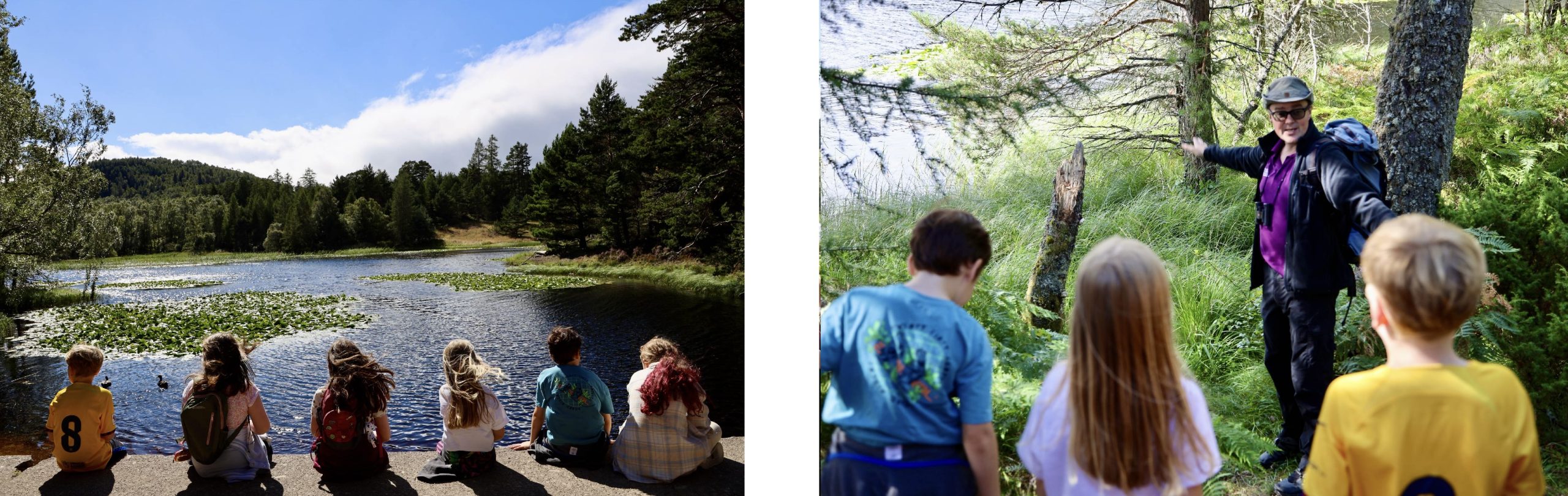 At Lochan Mor, Jonathan explained how the beavers have been doing since they arrived. There are early signs of beaver activity, such as felled trees and fewer lily pads – a favourite beaver food. Further environmental changes and regeneration are expected in the coming years. Along the way, Jonathan also shared lots of interesting facts about the ancient woodland all around and the nature within it. Check out the Did You Know section below this article to read some of those.
Overall, the success of the beaver reintroduction at Rothiemurchus is a testament to what can been achieved with careful planning, community involvement and great collaboration between project partners.
Enjoying nature responsibly on the Beaver Trail
The naming of the Beaver Trail and the creation of better waymarking and maps have attracted more visitors to Rothiemurchus and provided a structured route to improve ease of access along a recognised path where visitors won’t disturb the wildlife that calls the forest and lochs home. People can follow the path, enjoy the scenery, and possibly catch a glimpse of the beavers in their natural habitat.
As a result, Jonathan has already seen that beavers and humans can happily coexist in the same places. “The beavers have been very happy,” he explains. “It’s a really, really great example of a project where everybody’s got on board.”
We can all continue to help the beavers – and all the wildlife and nature around Rothiemurchus – by sticking to recognised paths, keeping dogs under close control, parking only in designated car parks, and being quiet and respectful.
Find out about future beaver events on the Park Authority website.
Did you know?
Here are some things the group learnt from Jonathan on the walk to Lochan Mor and back.
● The oldest beaver in Scotland, who is called Bjornar, is 19 years old.
● Emperor moth caterpillars are green and pink to blend in with heather, and males have feathery antennae to pick up the pheromones transmitted by female caterpillars.
● The longest face of a wood ant’s nest will always face roughly south, as wood ants regulate the temperature of their nest to around 20 degrees Celsius year-round by soaking in the sun’s rays and burrowing deep into the nest to spread the absorbed heat around.
● Pine trees from Rothiemurchus were cut down and bored during the 18th century to be used for water pipes in London.
● Just like humans, some squirrels are left-pawed and others are right-pawed. Squirrel-chewed pine cones provide clues about the dominant hand of that particular squirrel.
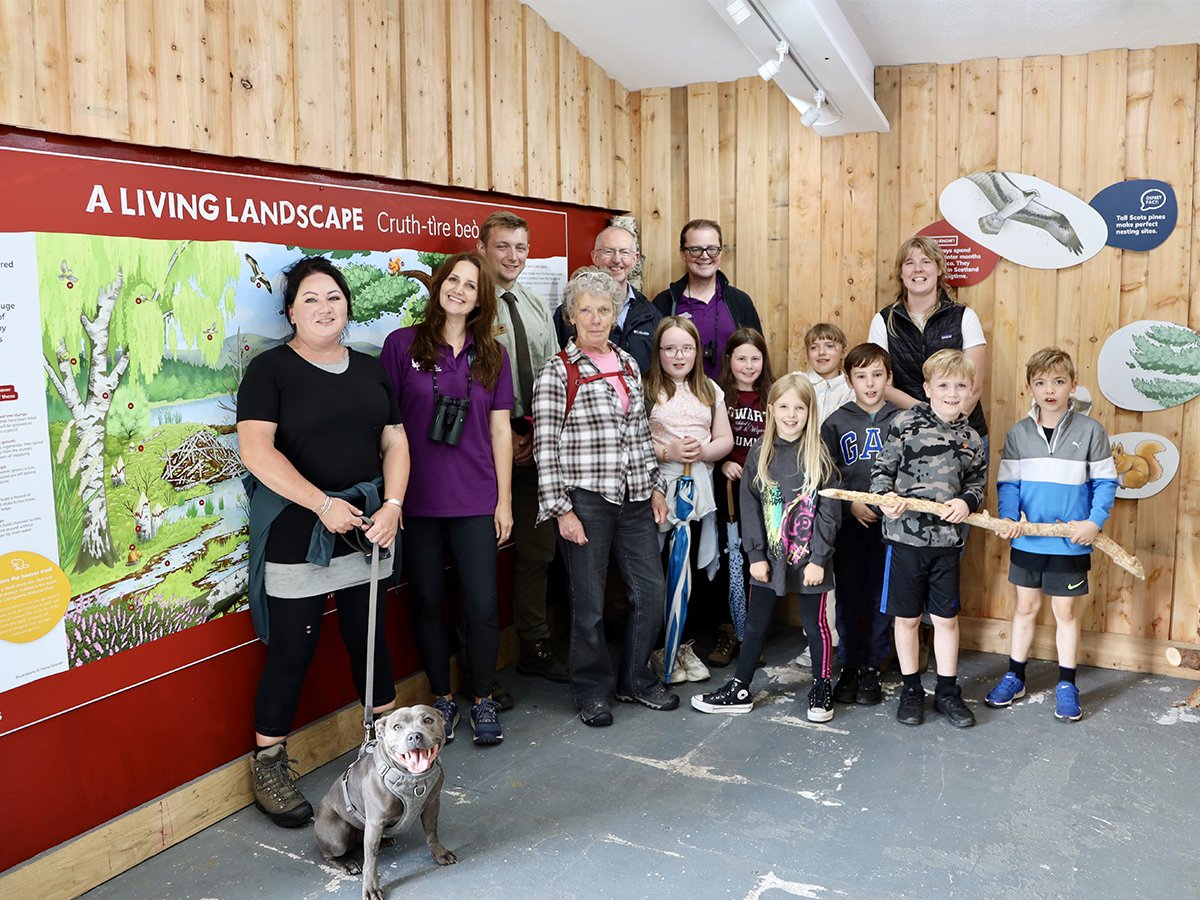
Dr Roisin Campbell-Palmer, Dr Sarah Henshall, Ollie Mackay, Jonathan Willet, Sandy Bremner and Lauren MacCallum join local families to explore the Beaver Trail and interactive display in the Barn Cafe ‘vestibule’.
A who’s who of the guests on the beaver walk
Dr Roisin Campbell-Palmer from the Beaver Trust played a critical role in the project, overseeing the trapping and relocation of beavers from conflict sites in Tayside. Her work ensured the beavers were healthy and ready to thrive in their new environment.
Beaver Project Leader Jonathan Willet has 30 years of experience as a wildlife guide, conservation officer, and educator. “It’s just the most amazing job in the world,” he says of his current role.
Sandy Bremner, convener of the Cairngorms National Park Authority board, emphasised how well-suited the National Park is for beavers, making it an ideal candidate for the Scottish Government’s translocation project.
Dr Sarah Henshall, Head of Conservation at the Park Authority, noted, “We wanted to give people a safe space where they could see beavers, where they’re not going to disturb them. At Rothiemurchus, there’s the infrastructure and the ranger service already in place.”
Ollie Mackay, head ranger at Rothiemurchus, has noticed an increasing number of people enjoying the Beaver Trail. “There are more people walking the loop past Loch an Eilein from the Barn Cafe and Farm Shop. It has made the area more accessible to those who need guidance, providing an easy walking route.”